
Killing our enemies abroad is just state-sponsored terror – whatever euphemism western leaders like to use
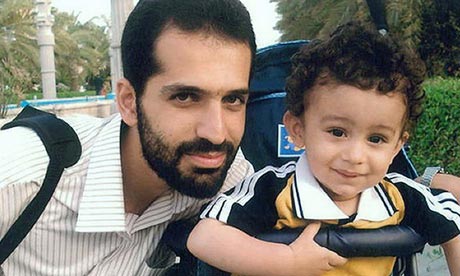
Mostafa Ahmadi Roshan, the Iranian
nuclear scientist killed in Tehran on January 11, with his son, Alireza.
Photograph: -/AFP/Getty Images
On the morning of 11 January Mostafa Ahmadi Roshan, the deputy
head of Iran's uranium enrichment facility at Natanz, was in his car on
his way to work when he was blown up by a magnetic bomb attached to his car door. He was 32 and married with a young son. He wasn't armed, or anywhere near a battlefield.
Since 2010, three other Iranian nuclear scientists have been killed in similar circumstances, including Darioush Rezaeinejad, a 35-year-old electronics expert shot dead outside his daughter's nursery in Tehran last July. But instead of outrage or condemnation, we have been treated to expressions of undisguised glee.
"On occasion, scientists working on the nuclear programme in Iran turn up dead," bragged the Republican nomination candidate Rick Santorum in October. "I think that's a wonderful thing, candidly." On the day of Roshan's death, Israel's military spokesman, Brigadier General Yoav Mordechai, announced on Facebook: "I don't know who settled the score with the Iranian scientist, but I certainly am not shedding a tear" – a sentiment echoed by the historian Michael Burleigh in the Daily Telegraph: "I shall not shed any tears whenever one of these scientists encounters the unforgiving men on motorbikes."
These "men on motorbikes" have been described as "assassins". But assassination is just a more polite word for murder. Indeed, our politicians and their securocrats cloak the premeditated, lawless killing of scientists in Tehran, of civilians in Waziristan, of politicians in Gaza, in an array of euphemisms: not just assassinations but terminations, targeted killings, drone strikes.
 Their purpose
is to inure us to such state-sponsored violence against foreigners. In
his acclaimed book On Killing, the retired US army officer Dave Grossman
examines mechanisms that enable us not just to ignore but even cheer
such killings: cultural distance ("such as racial and ethnic differences
that permit the killer to dehumanise the victim"); moral distance ("the
kind of intense belief in moral superiority"); and mechanical distance
("the sterile, Nintendo-game unreality of killing through a TV screen, a
thermal sight, a sniper sight or some other kind of mechanical buffer
that permits the killer to deny the humanity of his victim").
Their purpose
is to inure us to such state-sponsored violence against foreigners. In
his acclaimed book On Killing, the retired US army officer Dave Grossman
examines mechanisms that enable us not just to ignore but even cheer
such killings: cultural distance ("such as racial and ethnic differences
that permit the killer to dehumanise the victim"); moral distance ("the
kind of intense belief in moral superiority"); and mechanical distance
("the sterile, Nintendo-game unreality of killing through a TV screen, a
thermal sight, a sniper sight or some other kind of mechanical buffer
that permits the killer to deny the humanity of his victim").
Thus western liberals who fall over one another to condemn the death penalty for murderers – who have, incidentally, had the benefit of lawyers, trials and appeals – as state-sponsored murder fall quiet as their states kill, with impunity, nuclear scientists, terror suspects and alleged militants in faraway lands. Yet a "targeted killing", human-rights lawyer and anti-drone activist Clive Stafford Smith tells me, "is just the death penalty without due process".
Cognitive dissonance abounds. To torture a terror suspect, for example, is always morally wrong; to kill him, video game style, with a missile fired from a remote-controlled drone, is morally justified. Crippled by fear and insecurity, we have sleepwalked into a situation where governments have arrogated to themselves the right to murder their enemies abroad.
Nor are we only talking about foreigners here. Take Anwar al-Awlaki, an Islamist preacher, al-Qaida supporter – and US citizen. On 30 September 2011, a CIA drone killed Awlaki and another US citizen, Samir Khan. Two weeks later, another CIA-led drone attack killed Awlaki's 21-year-old son, Abdul-Rahman. Neither father nor son were ever indicted, let alone tried or convicted, for committing a crime. Both US citizens were assassinated by the US government in violation of the Fifth Amendment ("No person shall be deprived of life without due process of law").
An investigation by Reuters last October noted how, under the Obama administration, US citizens accused of involvement in terrorism can now be "placed on a kill or capture list by a secretive panel of senior government officials, which then informs the president of its decisions … There is no public record of the operations or decisions of the panel … Neither is there any law establishing its existence or setting out the rules by which it is supposed to operate."
Should "secret panels" and "kill lists" be tolerated in a liberal democracy, governed by the rule of law? Did the founders of the United States intend for its president to be judge, jury and executioner? Whatever happened to checks and balances? Or due process?
Imagine the response of our politicians and pundits to a campaign of assassinations against western scientists conducted by, say, Iran or North Korea. When it comes to state-sponsored killings, the double standard is brazen. "Actions are held to be good or bad, not on their own merits, but according to who does them," George Orwell observed, "and there is almost no kind of outrage … which does not change its moral colour when it is committed by 'our' side".
But how many more of our values will we shred in the name of security? Once we have allowed our governments to order the killing of fellow citizens, fellow human beings, in secret, without oversight or accountability, what other powers will we dare deny them?
This isn't complicated; there are no shades of grey here. Do we disapprove of car bombings and drive-by shootings, or not? Do we consistently condemn state-sponsored, extrajudicial killings as acts of pure terror, no matter where in the world, or on whose orders, they occur? Or do we shrug our shoulders, turn a blind eye and continue our descent into lawless barbarism?
• Follow Comment is free on Twitter @commentisfree
Since 2010, three other Iranian nuclear scientists have been killed in similar circumstances, including Darioush Rezaeinejad, a 35-year-old electronics expert shot dead outside his daughter's nursery in Tehran last July. But instead of outrage or condemnation, we have been treated to expressions of undisguised glee.
"On occasion, scientists working on the nuclear programme in Iran turn up dead," bragged the Republican nomination candidate Rick Santorum in October. "I think that's a wonderful thing, candidly." On the day of Roshan's death, Israel's military spokesman, Brigadier General Yoav Mordechai, announced on Facebook: "I don't know who settled the score with the Iranian scientist, but I certainly am not shedding a tear" – a sentiment echoed by the historian Michael Burleigh in the Daily Telegraph: "I shall not shed any tears whenever one of these scientists encounters the unforgiving men on motorbikes."
These "men on motorbikes" have been described as "assassins". But assassination is just a more polite word for murder. Indeed, our politicians and their securocrats cloak the premeditated, lawless killing of scientists in Tehran, of civilians in Waziristan, of politicians in Gaza, in an array of euphemisms: not just assassinations but terminations, targeted killings, drone strikes.
Their purpose
is to inure us to such state-sponsored violence against foreigners. In
his acclaimed book On Killing, the retired US army officer Dave Grossman
examines mechanisms that enable us not just to ignore but even cheer
such killings: cultural distance ("such as racial and ethnic differences
that permit the killer to dehumanise the victim"); moral distance ("the
kind of intense belief in moral superiority"); and mechanical distance
("the sterile, Nintendo-game unreality of killing through a TV screen, a
thermal sight, a sniper sight or some other kind of mechanical buffer
that permits the killer to deny the humanity of his victim").Thus western liberals who fall over one another to condemn the death penalty for murderers – who have, incidentally, had the benefit of lawyers, trials and appeals – as state-sponsored murder fall quiet as their states kill, with impunity, nuclear scientists, terror suspects and alleged militants in faraway lands. Yet a "targeted killing", human-rights lawyer and anti-drone activist Clive Stafford Smith tells me, "is just the death penalty without due process".
Cognitive dissonance abounds. To torture a terror suspect, for example, is always morally wrong; to kill him, video game style, with a missile fired from a remote-controlled drone, is morally justified. Crippled by fear and insecurity, we have sleepwalked into a situation where governments have arrogated to themselves the right to murder their enemies abroad.
Nor are we only talking about foreigners here. Take Anwar al-Awlaki, an Islamist preacher, al-Qaida supporter – and US citizen. On 30 September 2011, a CIA drone killed Awlaki and another US citizen, Samir Khan. Two weeks later, another CIA-led drone attack killed Awlaki's 21-year-old son, Abdul-Rahman. Neither father nor son were ever indicted, let alone tried or convicted, for committing a crime. Both US citizens were assassinated by the US government in violation of the Fifth Amendment ("No person shall be deprived of life without due process of law").
An investigation by Reuters last October noted how, under the Obama administration, US citizens accused of involvement in terrorism can now be "placed on a kill or capture list by a secretive panel of senior government officials, which then informs the president of its decisions … There is no public record of the operations or decisions of the panel … Neither is there any law establishing its existence or setting out the rules by which it is supposed to operate."
Should "secret panels" and "kill lists" be tolerated in a liberal democracy, governed by the rule of law? Did the founders of the United States intend for its president to be judge, jury and executioner? Whatever happened to checks and balances? Or due process?
Imagine the response of our politicians and pundits to a campaign of assassinations against western scientists conducted by, say, Iran or North Korea. When it comes to state-sponsored killings, the double standard is brazen. "Actions are held to be good or bad, not on their own merits, but according to who does them," George Orwell observed, "and there is almost no kind of outrage … which does not change its moral colour when it is committed by 'our' side".
But how many more of our values will we shred in the name of security? Once we have allowed our governments to order the killing of fellow citizens, fellow human beings, in secret, without oversight or accountability, what other powers will we dare deny them?
This isn't complicated; there are no shades of grey here. Do we disapprove of car bombings and drive-by shootings, or not? Do we consistently condemn state-sponsored, extrajudicial killings as acts of pure terror, no matter where in the world, or on whose orders, they occur? Or do we shrug our shoulders, turn a blind eye and continue our descent into lawless barbarism?
• Follow Comment is free on Twitter @commentisfree
چند دانشمند ایرانی دیگر نیز به همین شیوه ترور شدند. داریوش رضایی نژاد هم در حالی ترور شد که بیرون از مهد کودک دخترش، منتظر تحویل گرفتن او بود، ولی ما به جای اینکه آن را محکوم کنیم، به نوعی ابزار خوشحالی میکنیم.
این در حالی است که کاندیداهای انتخابات ریاست جمهوری آمریکا، ترور دانشمند ایرانی را کاری حیرتانگیز میدانند و یا سخنگوی نظامی اسرائیل در صفحه فیسک بوک خود مینویسد: من نمیدانم چه کسی دانشمند ایرانی را ترور کرده؛ اما بابت این ترور ناراحت نخواهم ش
ر واقع واژه ترور که ما برای کشتن دانشمندان هستهای ایرانی به کار میبریم، لغت مودبانهای است، چرا که این رخدادها ترور نیستند، بلکه کشتار هستند که سیاستمداران ما در ایران، وزیرستان، غزه و... با هر ابزاری علیه شهروندان غیر نظامی به کار میگیرند.
هدف آنان نیز این است که به ما بگویند، این افراد که هدف قرار میگیرند، خارجیها را در کشورهایشان به قتل میرساند.
«دیو گروسمن»، افسر سابق ارتش آمریکا در کتاب خود، مکانیسمهایی را بررسی میکند که به وسیله آنها، ما نه تنها زشتی این کارها را نادیده میگیریم، بلکه آن را توجیه میکنیم.
وی از دلایل فرهنگی و اخلاقی میگوید که برای توجیه از آن بهره میگیریم.
اما اکنون لیبرالها باید پاسخگو باشند که آیا خود آنان چنین فهرستی از کشتار را تحمل میکنند؟ بنیانگذاران آمریکا باید بگویند که آیا نظرشان این است که یکی بتوانند هم دستگیر و هم محاکمه و هم مجازات کند؟
تا چه اندازه ارزشهای ما باید قربانی موضوعی به نام امنیت شوند؟ چه زمانی ما به حاکمانمان اجازه دادهایم که انسانها را پنهانی به قتل برسانند، بدون اینکه پاسخگویی و مسئولیت پذیری در قبال آن داشته باشند؟
مسأله پیچیده یا ابهام آلود وجود ندارد. آیا ما بمبگذاری در یک ماشین غیرنظامی را تأیید میکنیم یا نه؟ آیا ما تروریسم دولتی را محکوم میکنیم یا نه؛ این مهم نیست که در کجای جهان ترور شده و چه کسی دستور ترور را صادر میکند؟ آیا ما باید شانههای خود را بالا بیندازیم و چشممان را روی این بربریسم بیقانون ببندیم؟
همه این سوال ها خطاب به رئیس MI6 نیز مطرح است . کسی که خود مستقیما از طرح سازمانش برای ترور دانشمندان هسته ای ایران سخن می گوید . خطاب به موساد وجود دارد که حالا مشخص شده است که حتی عمده نیروهای خود برای ترور و خرابکاری در ایران را از گروهک تروریستی ریگی استخدام می کرده است . برای آمریکا وجود دارد که سناتور آن کشور و کاندیدای ریاست جمهوری آن از خبر کشتن دانشمند ایرانی احساس خوشحالی می کند .
اگر پاسخگویی باشد ، سوالات زیادی وجود دارد که آنان باید پاسخگو باشند.


هیچ نظری موجود نیست:
ارسال یک نظر